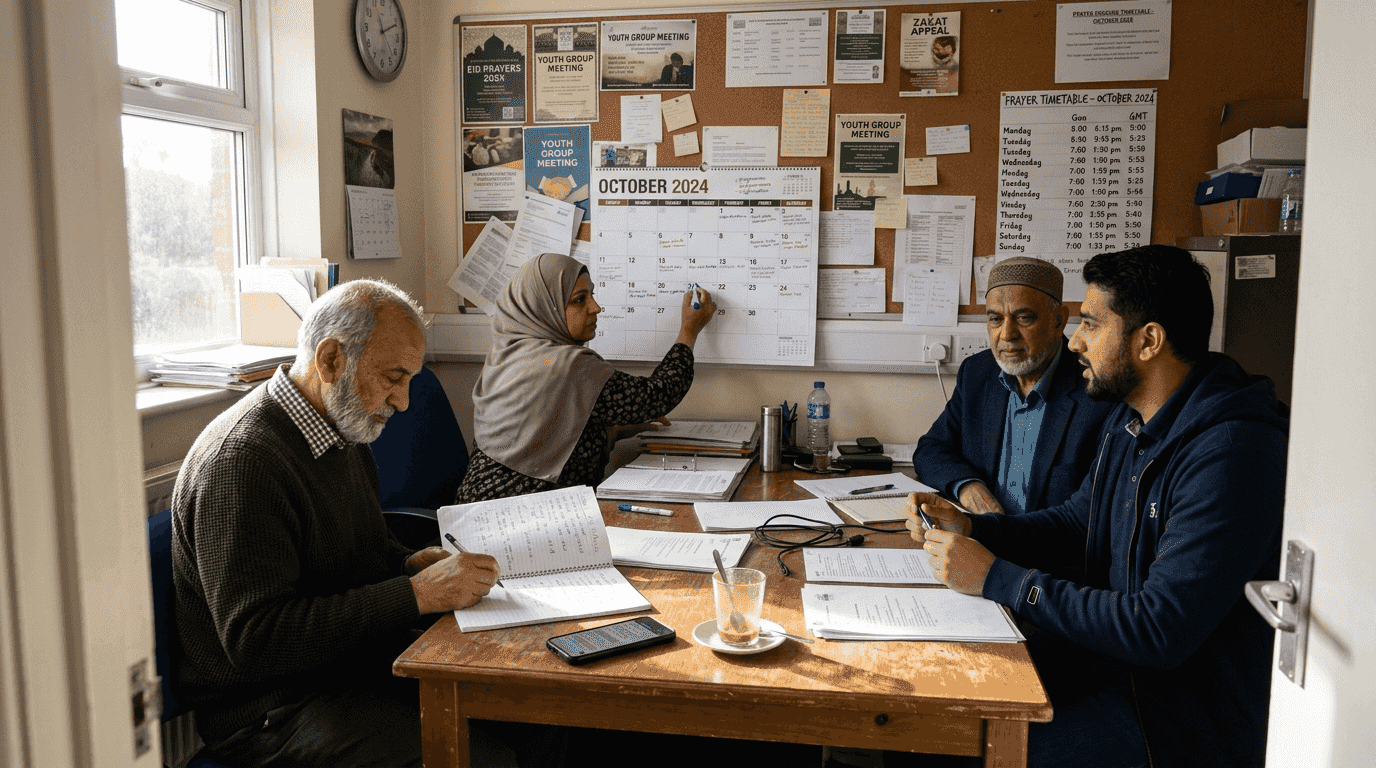
Mosque committees across the UK face mounting pressure to communicate effectively with increasingly diverse congregations whilst managing day-to-day operations. Traditional notice boards and verbal announcements no longer suffice when your community expects instant updates about prayer times, event changes, and important announcements. Digital communication tools now offer practical solutions to these challenges, enabling committees to reach members through multiple channels whilst streamlining administrative tasks. This comprehensive guide walks you through assessing your mosque's communication needs, creating a structured plan, implementing digital management systems, and continuously improving your outreach to strengthen community bonds and operational efficiency.
Table of Contents
- Understanding Your Mosque's Communication Needs
- Preparing The Right Communication Plan For Your Mosque
- Executing Your Mosque Communication Strategy With Digital Tools
- Monitoring And Improving Your Mosque's Communication Effectiveness
- Discover MasjidConnect: Your All-In-One Mosque Communication Solution
- FAQ
Key takeaways
| Point | Details |
|---|---|
| Assess communication needs | Identify your community's demographics, preferred channels, and information requirements before selecting tools |
| Create structured plans | Document clear objectives, content schedules, and responsibilities to ensure consistent messaging |
| Implement digital platforms | Modern masjid management software automates announcements, prayer times, and event updates efficiently |
| Monitor and adapt regularly | Track engagement metrics and gather feedback to refine your communication strategy continuously |
Understanding your mosque's communication needs
Before implementing any communication strategy, you must thoroughly evaluate your mosque's unique requirements and community characteristics. Start by mapping your audience segments: regular worshippers, occasional visitors, youth groups, elderly members, non-English speakers, and families with children. Each group has distinct information needs and channel preferences. Your Friday prayer attendees might prefer WhatsApp updates, whilst elderly members may rely on printed newsletters or verbal announcements.
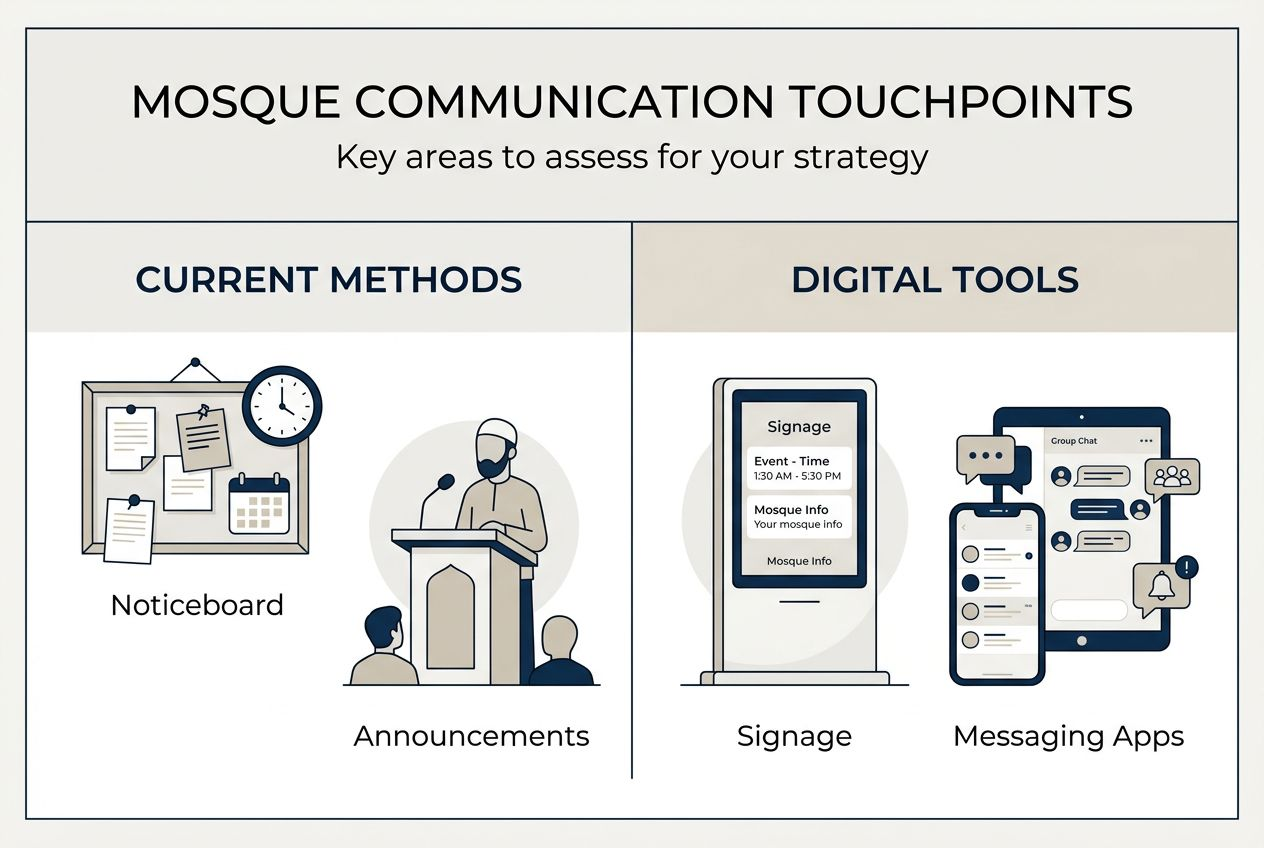
Evaluate your current communication methods honestly. Are announcements reaching everyone who needs them? Do members miss important event details or prayer time changes? Survey your community about their preferred communication channels and the types of information they value most. You'll likely discover gaps between what you're communicating and what people actually need to know.
Define specific, measurable goals for your communications. Perhaps you want to increase Ramadan programme attendance by 20%, improve donation transparency, or ensure every member receives emergency updates within 30 minutes. These concrete objectives will guide your strategy and help you measure success later. Effective masjid management software features support goal tracking through integrated analytics.
Consider operational areas where digital support could reduce administrative burden. Prayer timetable updates, event scheduling, donation tracking, and volunteer coordination all benefit from centralised management systems. List the tasks currently consuming excessive committee time, then prioritise those where automation would create the most significant impact.
Pro Tip: Create a simple spreadsheet listing all current communication touchpoints, their frequency, reach, and effectiveness ratings. This visual audit reveals redundancies and gaps you might otherwise miss.
Preparing the right communication plan for your mosque
A structured communication plan transforms good intentions into consistent action. Begin by articulating your mosque's core communication objectives aligned with your broader mission and values. Your plan should reflect Islamic principles of clarity, truthfulness, and community service whilst addressing practical information needs. Write these objectives down and ensure all committee members understand and support them.
Select appropriate communication channels based on your audience analysis. Most UK mosques in 2026 benefit from a multi-channel approach combining traditional and digital methods. Consider newsletters for detailed updates, social media for quick announcements, mosque digital signage software for in-building displays, WhatsApp groups for immediate alerts, and email for formal communications. A clear masjid management software platform ensures message delivery across channels.
Develop a content calendar outlining what information gets shared when and through which channels. Structure your calendar around the Islamic calendar, community events, and regular operational updates. For example:
- Daily automated prayer time updates via digital displays and mobile notifications
- Weekly Friday khutbah topics and community news through social media
- Monthly financial reports and upcoming events via email newsletter
- Quarterly strategy updates and volunteer opportunities through printed materials
- Immediate emergency alerts through SMS and WhatsApp
Assign clear responsibilities for each communication task. Designate specific committee members or volunteers to manage social media, update digital displays, write newsletters, and respond to community enquiries. Without assigned ownership, communication tasks fall through gaps during busy periods. Create backup assignments ensuring continuity when primary contacts are unavailable.
Pro Tip: Schedule a monthly 30-minute communication review meeting to assess what's working, address challenges, and adjust your calendar based on community feedback and upcoming priorities.
Executing your mosque communication strategy with digital tools
Implementing your communication plan efficiently requires selecting and integrating appropriate digital tools. Modern mosque management platforms combine multiple functions into unified systems, eliminating the need to juggle separate software for different tasks. Look for solutions offering prayer time automation, event management, donation processing, member databases, and multi-channel messaging capabilities.
Mosque digital signage software transforms how you share information within your building. Cloud-based screens automatically display accurate prayer times, upcoming events, Quranic verses, and urgent announcements without manual updates. These systems work offline during internet disruptions and allow remote content management from any device. Position screens strategically in prayer halls, entrances, and community spaces where congregants naturally gather.

Automation dramatically reduces administrative workload whilst improving communication consistency. Configure your management system to send automatic prayer time notifications, event reminders, and donation receipts without manual intervention. Set up workflows triggering specific communications based on member actions, such as welcome messages for new registrants or thank-you notes following donations. This ensures timely, relevant messaging whilst freeing committee members for higher-value tasks.
Integrate your chosen platform with existing communication channels to maximise reach. Quality masjid display systems sync with your website, social media accounts, and messaging apps, allowing you to update information once and distribute it everywhere simultaneously. This integration prevents the common problem of outdated information lingering on one channel whilst others show current details.
When evaluating mosque communication software, assess these essential features:
| Feature | Why it matters |
|---|---|
| Prayer time automation | Eliminates manual updates and ensures accuracy across all displays |
| Multi-channel distribution | Reaches diverse community members through their preferred platforms |
| Offline functionality | Maintains operations during internet outages |
| Mobile accessibility | Allows committee members to manage communications remotely |
| Member database | Enables targeted messaging to specific groups |
| Analytics and reporting | Tracks engagement and identifies improvement opportunities |
| Scalability | Grows with your community without requiring platform changes |
Prioritise platforms designed specifically for UK mosques, as they understand Islamic requirements, UK regulations, and community expectations better than generic tools.
Monitoring and improving your mosque's communication effectiveness
Regular evaluation separates effective communication strategies from those merely keeping busy. Establish key performance indicators measuring whether your communications achieve stated objectives. Track metrics like event attendance rates, donation response times, website traffic, social media engagement, email open rates, and community feedback sentiment. These quantitative measures reveal patterns and trends invisible through casual observation.
Collect qualitative feedback systematically through multiple channels. Place suggestion boxes in your mosque, conduct annual community surveys, hold focus groups with different demographic segments, and monitor social media comments. Ask specific questions about communication preferences, information gaps, and suggested improvements. Anonymous feedback often yields more honest insights than face-to-face conversations where people hesitate to criticise.
Analyse your communication data monthly to identify what's working and what needs adjustment. Compare actual results against your original objectives. If Friday prayer attendance hasn't increased despite enhanced event promotion, investigate whether your messages reach the right people at the right times through appropriate channels. Perhaps younger members prefer Instagram stories over email newsletters, or non-English speakers need translated materials.
Adapt your communication plan based on evidence rather than assumptions. When data shows certain channels underperforming, reallocate resources to more effective methods. If community feedback requests specific information types you're not providing, adjust your content calendar accordingly. Technology evolves rapidly, so reassess your digital tools annually to ensure they still meet your needs. Regular masjid management software features evaluation confirms you're maximising platform capabilities.
Implement a continuous improvement cycle:
- Set specific communication objectives with measurable targets
- Execute your plan consistently for a defined period
- Gather quantitative metrics and qualitative feedback
- Analyse results identifying successes and gaps
- Adjust strategy, channels, or content based on findings
- Repeat the cycle with refined objectives
This systematic approach transforms communication from reactive firefighting into proactive community building.
Pro Tip: Create a simple dashboard displaying your key metrics in one place. Visual representation of trends makes patterns obvious and facilitates data-driven decision making during committee meetings.
Discover MasjidConnect: your all-in-one mosque communication solution
Implementing these communication strategies becomes significantly easier with purpose-built technology designed specifically for UK mosques. MasjidConnect integrates prayer time displays, event management, digital signage, donation processing, and community databases into one intuitive platform, eliminating the complexity of managing multiple disconnected systems.
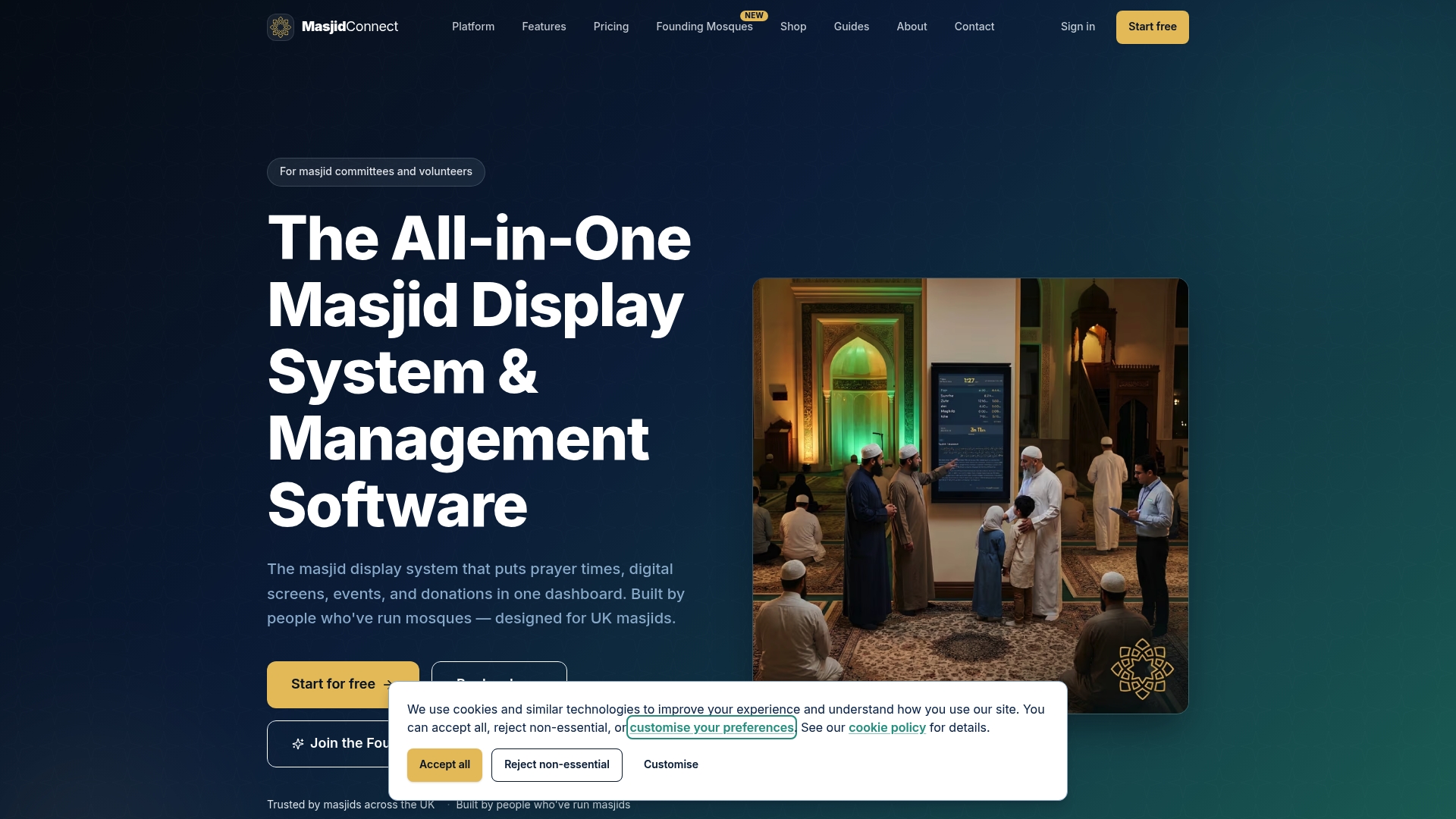
The cloud-based mosque digital signage software automatically updates prayer times and displays announcements across your building, whilst the masjid display system works offline during internet disruptions. Built by people who understand mosque operations firsthand, masjid management software from MasjidConnect focuses on simplicity and reliability rather than unnecessary complexity. Start with the free plan to experience how integrated digital tools transform mosque communications and community engagement.
FAQ
How can mosque committees improve communication with diverse community members?
Use multilingual communications reflecting your congregation's linguistic diversity, particularly for critical announcements and event details. Engage representatives from different community segments when planning messages to ensure cultural sensitivity and relevance. Offer multiple communication channels so members can choose their preferred method, whether digital platforms, printed materials, or verbal announcements.
What are common mistakes to avoid when managing mosque communications?
Avoid irregular, unpredictable updates that train your community to stop checking for information. Unclear messages lacking specific details about times, locations, or actions required create confusion rather than clarity. Failing to respond promptly to community enquiries or incorporate feedback signals that leadership doesn't value member input. Relying exclusively on single channels excludes segments of your congregation who don't use those platforms.
What features should mosque management software have in 2026?
Prioritise automation of prayer times and event displays to reduce manual workload whilst ensuring accuracy. Multi-channel communication capabilities allow simultaneous updates across digital signage, websites, and mobile apps from one interface. Cloud-based access enables committee members to manage communications remotely, whilst offline functionality maintains operations during connectivity issues. User-friendly interfaces requiring minimal technical knowledge ensure all committee members can contribute effectively. Comprehensive masjid management software features should include member databases, donation tracking, and detailed analytics.
How often should a mosque review its communication strategy?
Conduct formal communication strategy reviews at least annually, ideally before Ramadan when engagement peaks and communication demands increase significantly. Schedule additional reviews following major community events, leadership changes, or technology platform updates. Use community feedback and engagement data to guide interim adjustments between formal reviews. Quarterly check-ins ensure your strategy remains responsive to emerging needs without requiring constant major overhauls.
Recommended
- Masjid Display System — Cloud-Based Mosque Screens | MasjidConnect | MasjidConnect
- Mosque Digital Signage Software — Cloud Masjid Screens | MasjidConnect | MasjidConnect
- Masjid Management Software — All-in-One Mosque Platform | MasjidConnect | MasjidConnect
- Masjid Management Software Features | MasjidConnect